What Happens During Oil Massage?
Most people asking what happens during oil massage want a simple answer before they book. They want to know if it hurts, what the therapist does, how much oil is used, and whether they will actually feel better after. Fair question. If it is your first session, knowing the process makes it easier to relax from the moment you walk in.
Oil massage is one of the most popular treatments because it is simple, effective, and comfortable for many body types. The oil helps the therapist move smoothly over the skin without pulling or friction. That means better flow, steady pressure, and a more relaxing experience for tired muscles, stress, and body stiffness.
What happens during oil massage from start to finish
A good oil massage usually starts before the first touch. The therapist will ask a few basic questions about your body pain, pressure preference, and any areas you want more focus on. Some people want shoulder and neck relief after long work hours. Others need back, legs, or full-body relaxation. This short consultation matters because the session should match your comfort, not follow the same routine for everyone.
Once the massage begins, you are given privacy to get ready and settle onto the massage table. Towels or sheets are used for proper covering, and only the area being worked on is uncovered. This helps you stay comfortable and respected throughout the session.
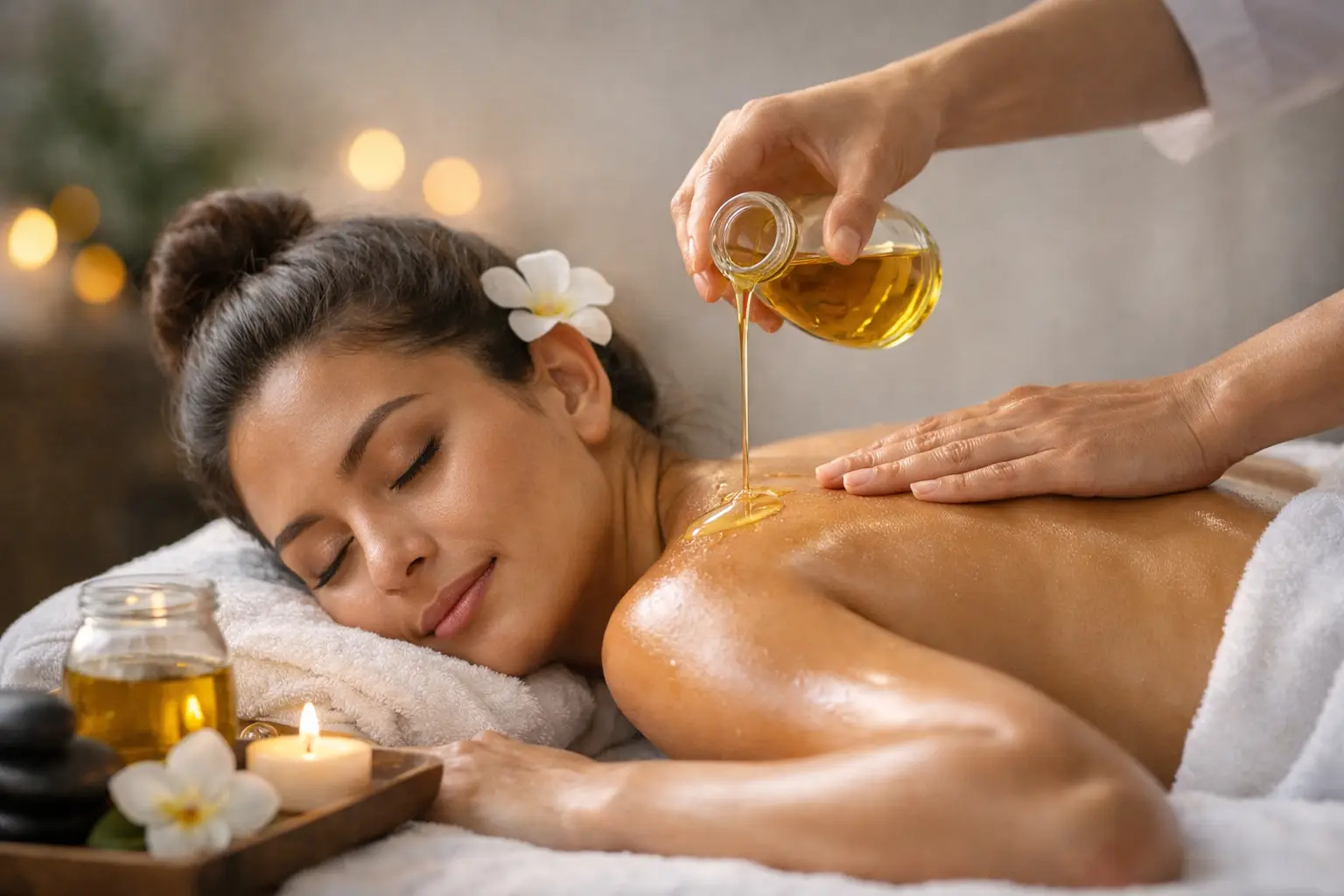
The therapist then warms a small amount of oil in the hands and starts with smooth strokes. In the beginning, the pressure is often light to moderate. This is not wasted time. It helps spread the oil, relax the outer muscles, and let your body adjust. If your muscles are very tight, the therapist may increase pressure slowly instead of going hard right away.
As the session continues, the therapist works area by area. A full-body massage often includes the back, shoulders, neck, arms, legs, and sometimes the feet and scalp depending on the service. Some people book only for one problem area, such as lower back pain or shoulder tension. In that case, more time goes into the places that need attention.
How the therapist uses oil during the massage
The oil is not just there to make the skin shiny. It has a practical job. It reduces drag on the skin so the therapist can use long gliding strokes, circular motions, kneading, and pressure techniques more comfortably. Without oil, the movement can feel rough or interrupted. With the right amount, the therapist can maintain smooth contact and work deeply without unnecessary discomfort.
Different oils may be used depending on the spa and the treatment style. Some are light and absorb quickly. Others stay on the skin longer and support a slower massage. The exact product can vary, but the main goal is always the same – better movement, better comfort, and a more soothing session.
A common question is whether a lot of oil will be used. Usually, no. A professional therapist applies enough to help the massage flow, then adds more only when needed. It should feel comfortable, not messy. If you dislike too much oil on the skin, you can say so before the session starts.
What does an oil massage feel like?
For most people, it feels warm, smooth, and calming at first. Then it becomes more targeted as the therapist reaches tense muscles. If you have knots in the shoulders or stiffness in the lower back, you may feel stronger pressure in those spots. That is normal. But pain should not be the goal.
A good therapist pays attention to your response. Some soreness or tenderness can happen in tight areas, especially if you have been carrying stress for days or weeks. Still, there is a difference between helpful pressure and too much force. If something feels sharp, uncomfortable, or too intense, say it immediately. Massage works best when the pressure fits your body.
People also respond differently depending on the massage style. A relaxing oil massage is usually steady and gentle to moderate. A deeper session may include slower pressure and more focused work on knots. If you book a traditional style such as Indian, Kerala, Russian, Thai-influenced, or Pakistani bodywork with oil, the rhythm and technique may change slightly. That is why communication matters.
Areas commonly treated during oil massage
The back is usually the first area therapists focus on because it holds a lot of daily tension. Long driving hours, desk work, standing jobs, lifting, and poor sleep posture all show up there. The shoulders and neck are also common trouble spots, especially for people using phones and computers for many hours.
Legs are another major focus, particularly for workers who stand all day or walk a lot. Oil massage can help the muscles feel less heavy and more refreshed. Arms and hands may be included too, which many people appreciate more than they expect, especially if they do repetitive work.
Feet can be a strong finishing point in the session because they carry body weight all day. Some clients also like a light scalp massage near the end because it adds another layer of relaxation. Not every session includes every area, though. It depends on time, your preference, and the treatment chosen.
What happens during oil massage if you are very tense
If your body is extremely tight, the session may begin gently and stay gentler than you expected. That is often the right approach. Muscles that are already guarding themselves do not always respond well to aggressive pressure. Sometimes slower, controlled work with oil helps the body soften more effectively.
You may notice that one side of the body feels tighter than the other. That is common. Your therapist might spend more time there, especially in the shoulder, hip, or lower back. This is one reason customized massage matters. Two people can book the same service and still receive a different treatment based on what their body needs.
Breathing changes too. Many clients start the massage holding tension in the jaw, shoulders, and chest without realizing it. As the session goes on, breathing usually becomes deeper and slower. That relaxed breathing helps the body respond better to the massage.
What to do during the session
The easiest job for the client is simple – relax and speak up when needed. You do not need to help the therapist by tensing, turning early, or staying silent if something feels wrong. If the room feels too cool, the pressure feels too strong, or you want more attention on one area, say it. A professional therapist expects that.
It is also normal if your mind stays busy for the first few minutes. Many people come in straight from work, traffic, or a stressful day. The body does not switch off instantly. Give it a little time. Once the oil massage finds a steady rhythm, most people start to settle.
Some clients even feel sleepy. That is a good sign. It usually means the nervous system is calming down and the body is finally getting a break.
What happens after an oil massage
When the massage ends, most people feel lighter, looser, and more comfortable in the muscles. Some feel immediate relief. Others notice the full benefit later, after resting, drinking water, and moving around gently. If you had deeper pressure on very tight muscles, mild soreness can happen the next day. That is not unusual.
Your skin may feel soft from the oil, and your body may feel warm and relaxed. Many people sleep better after a session. Some also notice reduced mental stress, not just physical tension. That is one reason oil massage is popular with people who are overworked, physically tired, or mentally drained.
Aftercare is simple. Give yourself a little time before rushing back into heavy activity. Drink water, avoid straining the body right away, and let the relaxed feeling settle in. If you found the pressure too light or too strong, remember that for your next visit so the therapist can adjust.
Is oil massage right for everyone?
For many adults, yes, but it depends on the situation. If you want smooth, relaxing bodywork with customized pressure, oil massage is often a strong choice. If you dislike slippery products on the skin or want very dry stretching-based work, another style may suit you better. Skin sensitivity, injuries, and certain health concerns should also be mentioned before the session.
That is why practical service matters more than fancy language. A good massage is not about making big promises. It is about listening to the client, using the right pressure, and giving real relief in a clean, friendly setting. At Salma Spa Ajman, that is exactly why many clients choose therapist-led oil massage when they want affordable comfort and dependable care at any hour.
If you have been delaying a session because you were unsure what to expect, now you know the simple truth – oil massage is a calm, guided treatment designed to help your body soften, your mind slow down, and your muscles feel human again.